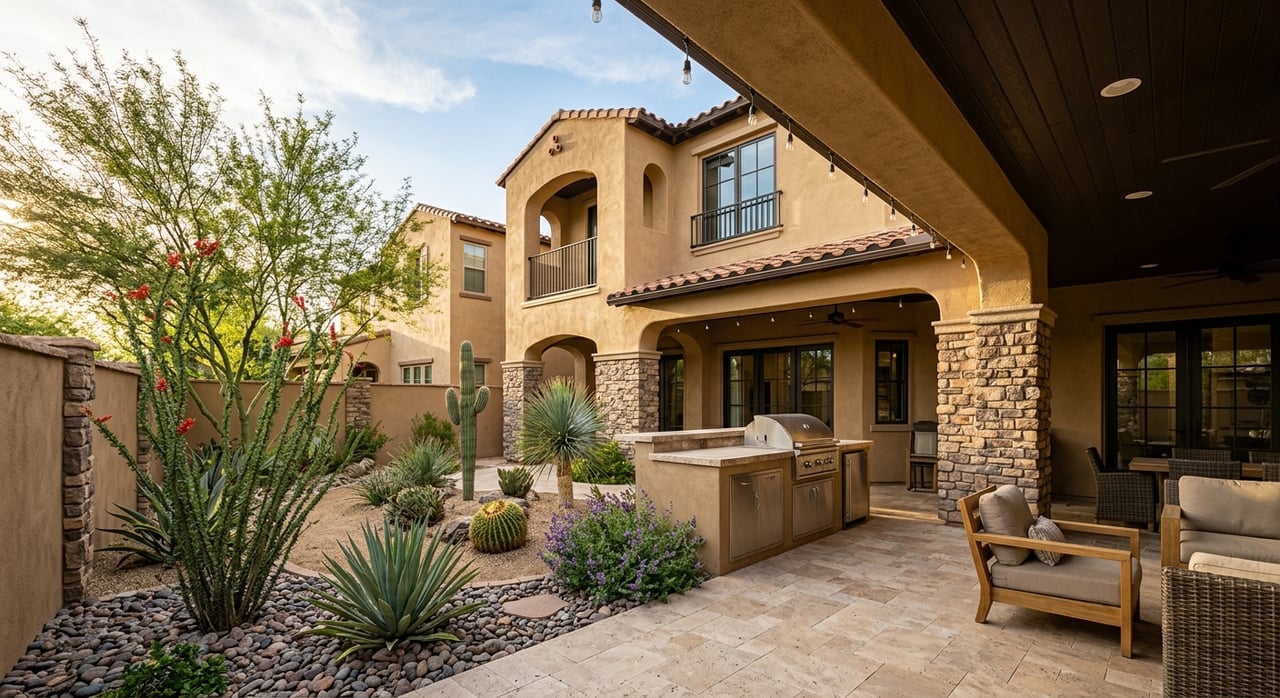
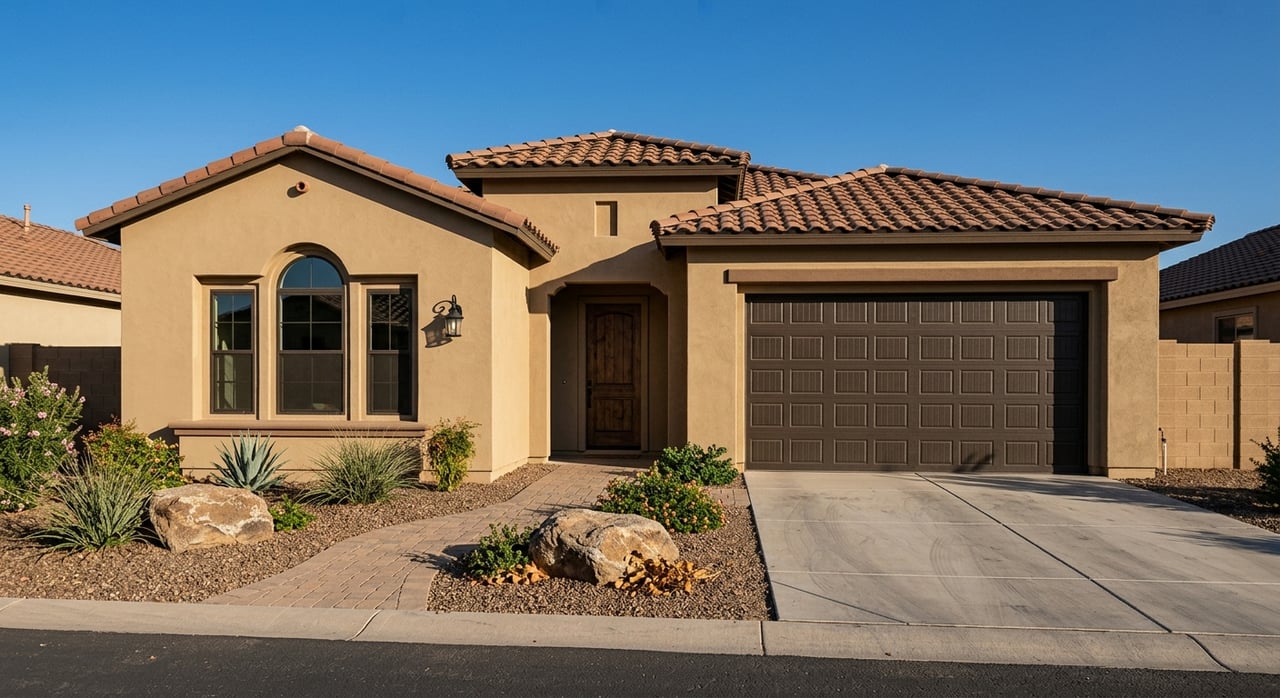
Trying to decide between a move-in ready resale or a brand-new build in Gladden Farms? You are not alone. The community keeps growing, and both paths can make sense depending on your timing, budget, and risk comfort. In this guide, you will see how prices compare, which incentives matter, what timelines to expect, and what inspections and warranties to plan for. Let’s dive in.
Gladden Farms at a glance
Gladden Farms is a large master-planned community in the Town of Marana with themed parks, miles of trails, and a popular splash pad. The community association supports events and amenities, while the Town of Marana maintains the larger Community Park. You can learn more about community life and documents on the Gladden Farms Community Association site.
Nearby, you will find grocery-anchored shopping and services along Tangerine Road and the I‑10 corridor, including a Fry’s Marketplace node that serves the area.
Prices today: resale vs new build
- Resale snapshot: Redfin reported a median sale price of about 371,000 dollars in January 2026 for Gladden Farms. Realtor.com showed a median near 380,000 dollars in December 2025. Different data windows cause variation, but both place the median in the high 300s.
- New-build context: Recent community phases have advertised base prices starting in the mid 300s and reaching into the 400s depending on plan, series, and lot. As an example of active builders, Meritage’s Fieldstone communities in Gladden Farms show quick-move-in and to-be-built options with public pricing examples starting in the mid 300s on some series. See current offers on Meritage’s Fieldstone page. KB Home has been active with The Legends at Gladden Farms; the company announced the community in its KB Home release. Richmond American has also offered plans in Parkside at Gladden Farms, with some plans publicly noted “from 409,990 dollars.”
Prices and plans change quickly. Always verify exact base pricing, lot premiums, and current incentives at the builder sales office before you compare to a specific resale.
What this means for your budget
- The gap between resale and new build is often smaller than you expect once you factor incentives and energy efficiency.
- Builder credits, rate buydowns, and design incentives can reduce your effective cost at closing or your early monthly payments.
- For apples-to-apples, compare the resale median with a new-build’s base price plus your planned upgrades and any incentives.
Incentives that change the math
In 2024 and 2025, a majority of new-home communities nationally advertised incentives on quick-move-in homes, and many offered to-be-built incentives as well. Industry tracking shows this trend has been widespread, which means incentives are a standard lever to move inventory, not a rare perk. See a market summary of incentive prevalence in Zonda’s update, summarized by SBCA Components.
Local examples in Gladden Farms include move-in programs and timelines from active builders. Meritage’s Fieldstone page shows “closing in 60 days or less” on certain quick-move-in homes, and it has listed a buyer-friendly delay reimbursement on some timelines. Review current offers directly on Meritage’s Fieldstone page and confirm terms with the sales office.
How to evaluate an incentive
- A 2/1 temporary buydown lowers your first two years of payments but resets later. Plan for the payment at the end of the buydown.
- A seller or builder credit might lower closing costs, but it does not always reduce your loan amount. A permanent price reduction may have a larger long-term effect on total interest.
- Always compare your “net-to-buyer” cost: base price after incentives plus selected upgrades, expected HOA dues, and your final rate. Industry guides on building vs buying reinforce this side-by-side view of total cost and payments over time. For more context on cost components, review this comparison overview.
Timelines: how fast can you move?
- Quick-move-in/spec homes: Many close within 30 to 60 days, depending on title and loan speed. Meritage publicly notes “closing in 60 days or less” on some Fieldstone inventory. See current timing on Meritage’s page.
- To-be-built: In many Sunbelt markets, production builds often run 4 to 9 months from permit to finish. This can vary by plan, options, and permitting. For a helpful overview of build timelines and key steps, review this construction guide.
Financing note
- Resale purchases usually close in about 30 to 45 days with a conventional, FHA, or VA loan once you are preapproved.
- New construction can be a quick-move-in with standard financing, or a to-be-built path that may involve construction-to-permanent programs or builder lender packages. If an incentive is tied to a preferred lender, ask for a full cost comparison in writing.
Inspections and quality control
Even with new construction, independent inspections protect you. Schedule three checkpoints:
- Pre-drywall: Inspect framing, rough plumbing, electrical, and HVAC routing before walls close.
- Final/pre-closing: Do a full inspection and capture items on a punch list before you accept keys.
- 11-month warranty: Inspect again before the one-year workmanship warranty expires to catch settlement or seasonal issues.
Arizona inspectors outline this timeline and offer specialty services like 11-month checks. See a service overview from a local firm at Horizon Inspection Service.
Common new-build punch list items include grading and drainage fixes, roof flashing and stucco sealants, HVAC duct balancing, minor tile or drywall repairs, and exterior caulking at windows and doors. Attend the walkthrough with your inspector report and a notepad so items are documented and assigned for repair.
Warranties and what to verify
Most production builders use a 1–2–10 model: one year for workmanship and materials, two years for distribution systems like plumbing, electrical, and HVAC, and ten years of structural coverage that is often insurance-backed. Review what a structural warranty typically covers in this overview from 2-10 Home Buyers Warranty.
Ask these warranty questions before you sign:
- Who is the warranty provider and is structural coverage insurer-backed?
- How do you submit a claim, and what are response times for emergency vs non-emergency items?
- Is the warranty transferable on resale, and is arbitration required?
- Which items are excluded or considered maintenance?
Also confirm manufacturer warranties for appliances, windows, roofing, and HVAC. Builders often ask buyers to register components to keep coverage intact. Meritage, for example, publishes manufacturer info and registration steps on its homeowner portal.
Decision framework: which path fits you?
Use this quick gut-check to narrow your choice.
Budget and monthly payment
- Resale reference: Late 2025 to early 2026 medians in Gladden Farms ranged from about 371,000 to 380,000 dollars depending on the data window.
- New-build reference: Recent phases have shown base pricing starting in the mid 300s and reaching into the 400s with plan and lot differences. Incentives can shift the effective cost.
- Action: Price a real resale comp list and a real builder lot with your planned options, then compare both monthly payments and your total cash to close.
Timing and urgency
- If you must move within 1 to 2 months, a resale or quick-move-in home usually fits best.
- If you can wait and want to choose finishes, a to-be-built plan may make sense.
Risk tolerance and maintenance
- New build: Less near-term maintenance and a warranty safety net, but plan for punch-list follow-up and early settling.
- Resale: You can see how the home has performed over years and negotiate on price or repairs, but you may inherit deferred maintenance.
Due-diligence checklist
- Request the builder’s full warranty booklet and claims process.
- Ask for an “included features” sheet so you know what is in base price and what is an upgrade.
- Order a full home inspection on any resale and review seller disclosures, past permits, and utility history.
- For both paths, obtain the HOA resale or estoppel packet during your offer period. The GFCA site links to the official resale addendum; financials and some records may require owner portal access.
Example monthly payment snapshot
Below is a simple, side-by-side look at how payments can compare. These are examples, not quotes. Property taxes, insurance, mortgage insurance, and HOA dues are extra. Always get lender estimates for your file.
Assumptions
- 30-year fixed, 10 percent down, and a sample market rate of 6.75 percent.
- Payment factors are rounded for clarity.
A) Resale example
- Purchase price: 380,000 dollars. Down payment: 38,000 dollars. Loan: 342,000 dollars.
- Estimated principal and interest at 6.75 percent: about 2,220 dollars per month.
- You may request a seller credit for closing costs or repairs, but the loan amount stays the same unless the price changes.
B) New-build example with incentives
- Base price: 395,000 dollars. Upgrades: 10,000 dollars. Builder closing cost credit: 10,000 dollars. Loan at 10 percent down on the contract price: about 355,500 dollars.
- Estimated principal and interest at 6.75 percent: about 2,310 dollars per month.
- If the builder offers a 2/1 buydown, your first-year payment could look like this:
- Year 1 at 4.75 percent: about 1,850 dollars per month.
- Year 2 at 5.75 percent: about 2,000 dollars per month.
- Years 3 to 30 at 6.75 percent: about 2,310 dollars per month.
- If instead you receive a permanent rate buydown to 6.25 percent, payment would be about 2,190 dollars per month for the full term.
Takeaway: Temporary buydowns lower near-term cash flow. Permanent rate reductions or price changes affect long-term cost. Ask your lender to compare the full 5-year and 10-year totals for each option.
How we can help in Gladden Farms
Choosing between a resale and a new build comes down to your timing, payment comfort, and how much you value customization and warranties. We help you price real comps, vet builder incentives, plan inspections at each stage, and negotiate with clarity. If you are ready to compare a specific resale shortlist with a builder lot and options sheet, reach out to the boutique team at Luxury Signature Group for a local, hands-on strategy.
FAQs
What makes Gladden Farms popular with buyers?
- It is a master-planned community with parks, trails, and organized amenities. The Town of Marana maintains the Community Park, and the GFCA supports events and resources for residents.
Are new builds in Gladden Farms more expensive than resale homes?
- Not always. Late 2025 to early 2026 medians for resales sat in the high 300s, and several new-build series started in the mid 300s. Incentives can narrow or reverse the gap on specific homes.
How fast can I close on a Gladden Farms home?
- Quick-move-in new builds and resales can often close within 30 to 60 days. To-be-built timelines often run 4 to 9 months, depending on plan, options, and permitting.
Do I need inspections on a new home in Gladden Farms?
- Yes. Schedule pre-drywall, final, and 11-month inspections to protect your warranty rights and document any needed repairs.
What warranties do Gladden Farms builders usually provide?
- Many use a 1–2–10 structure: one year for workmanship, two years for systems, and ten years for structural coverage that is often insurance-backed. Confirm the provider and claims steps in writing.