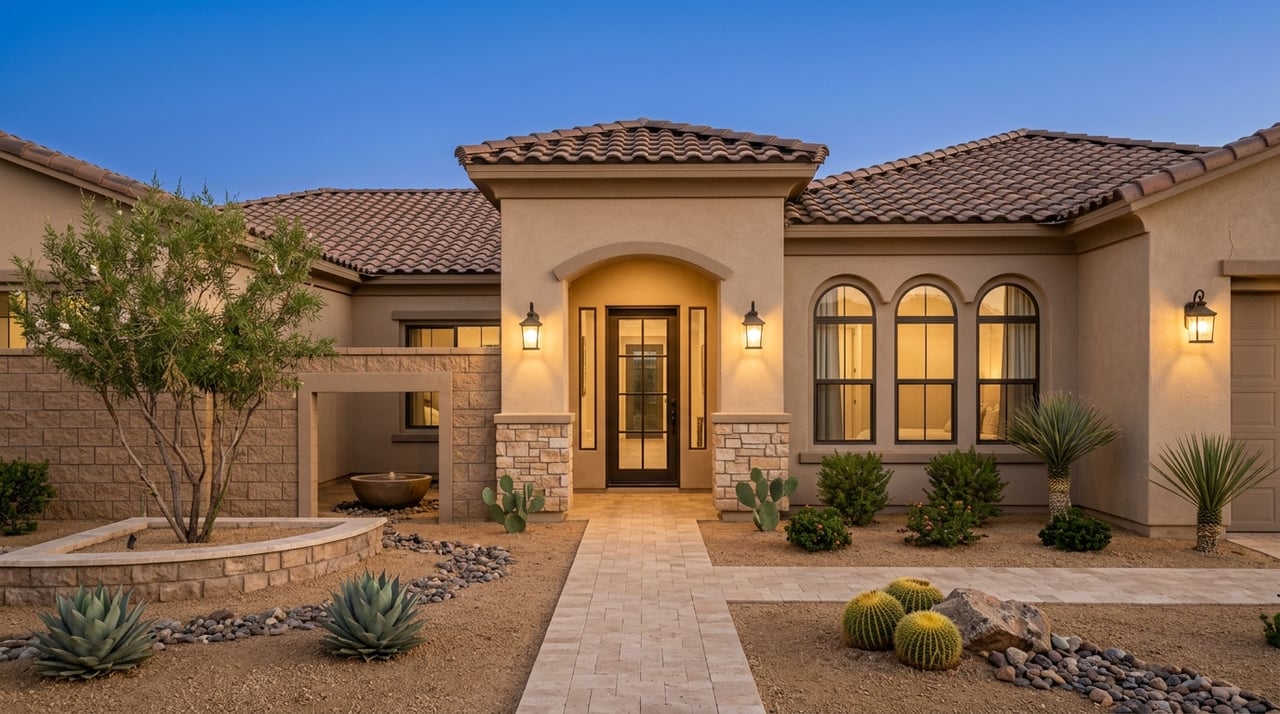
Gilbert vs Queen Creek Homes: How Mesa Compares
June 11, 2026
June 11, 2026
Trying to choose between Gilbert, Queen Creek, and Mesa can feel harder than it should. All three sit in the East Valley, all three attract buyers for different reasons, and each one offers a distinct mix of housing, commute patterns, and day-to-day lifestyle. If you want a clearer way to compare them, this guide will help you sort through the tradeoffs and figure out which market may fit you best. Let’s dive in.
If you zoom out, these three cities each fill a different role in the East Valley.
Gilbert is often the middle-ground option. It had about 287,285 residents in 2025, a mean commute of 25.9 minutes, a 73.1% owner-occupied housing rate, and a median owner-occupied home value of $575,100. That combination points to a well-established suburban market that still feels balanced.
Queen Creek sits farther out and reads as the most suburban-outskirts option of the three. It had about 89,770 residents in 2025, a 31.1-minute mean commute, a 90.2% owner-occupied housing rate, and a median owner-occupied home value of $635,400. It also has a larger average household size of 3.21 people, which helps reinforce its larger-household, detached-home profile.
Mesa is the biggest and most mixed market. It had about 513,656 residents in 2025, a 24.7-minute mean commute, a 64.4% owner-occupied housing rate, and a median owner-occupied home value of $408,000. In plain English, Mesa gives you the broadest range of housing and a more varied city feel.
For many buyers, the smartest place to start is with housing type. If the kind of home you want is clear, your city choice often becomes much easier.
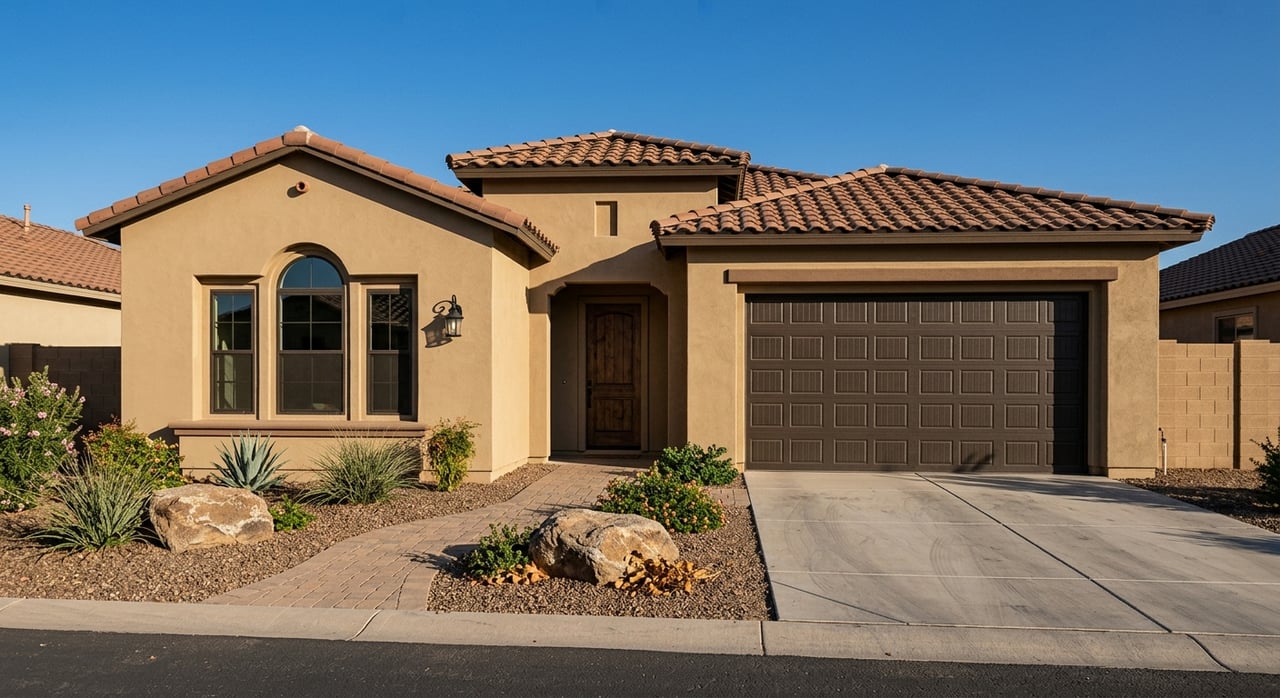
Queen Creek stands out for its highly uniform housing stock. The town’s housing assessment says about 94% of its homes are single-family detached, and about 96% are single-family when attached units are included.
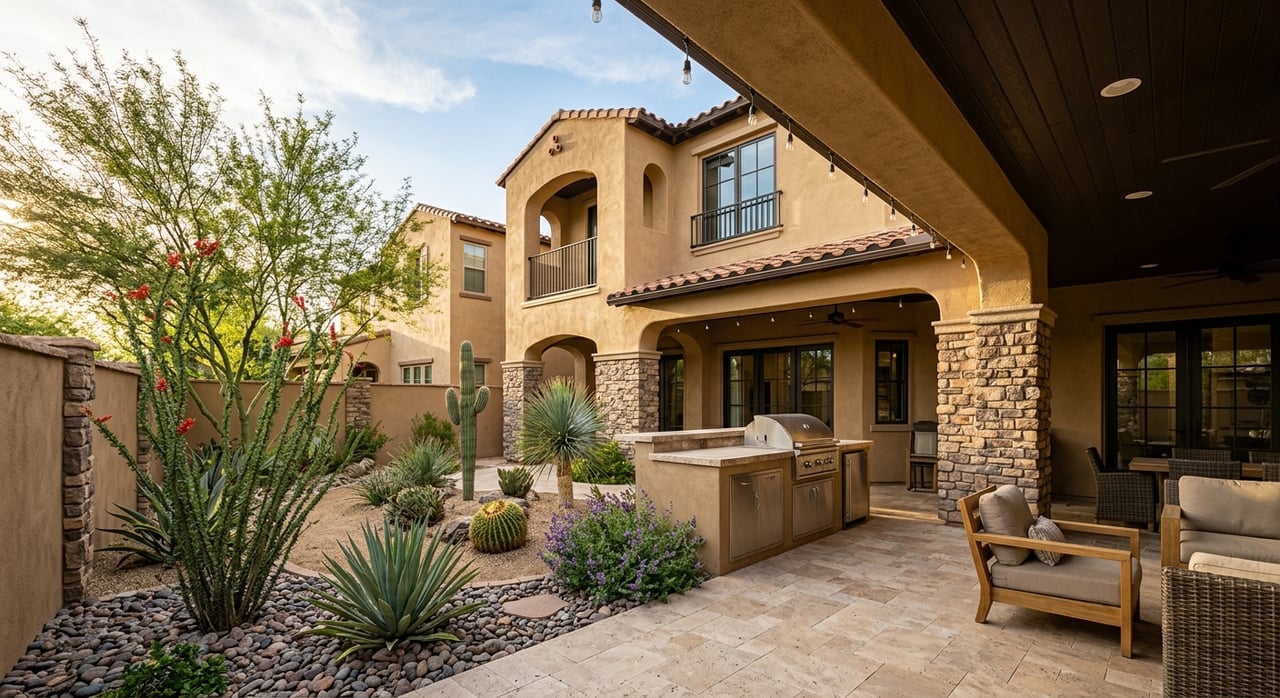
That means Queen Creek is the clearest fit if you want a mostly detached-home environment. It tends to appeal to buyers who picture newer subdivisions, more separation between home types, and a farther-out suburban setting.
Gilbert is also strongly single-family, but it offers a bit more variety than Queen Creek. The town reports that 86.3% of units are low-density single-family homes, while 13.4% are multifamily developments.
That makes Gilbert feel suburban and established, without being quite as uniform as Queen Creek. If you want a detached-home market but also value a little more flexibility in location or product type, Gilbert often lands in a comfortable middle position.
Mesa offers the broadest product mix of the three. According to the city’s 2025 to 2029 Consolidated Plan, 56.0% of residential properties are 1-unit detached, with the rest spread across attached homes, smaller multifamily properties, larger apartment communities, and mobile-home categories.
Mesa also has a wider age range in its housing stock. The city notes that apartment inventory grew fastest, and many homes on the west side were typically built before 1980, which helps explain why Mesa can feel more varied from one area to the next.
Once housing is narrowed down, the next major factor is how much driving or transit access matters in your routine.
Mesa has the shortest mean commute of the three at 24.7 minutes. It also has the strongest public transit options, with local bus service, express routes, the Mesa Downtown Buzz, the Mesa Fiesta Buzz, and Metro Light Rail service.
If you want more transportation flexibility, Mesa is the easiest choice to justify. It gives you the most built-in transit support and the most city-like transportation network among these three markets.
Gilbert’s mean commute is 25.9 minutes, which places it close to Mesa and well ahead of Queen Creek. Gilbert also offers multiple Valley Metro bus routes, a park-and-ride option, and an express route to downtown Phoenix.
The route network also connects to places like downtown Mesa, Chandler, ASU Polytechnic, Mercy Gilbert, Boeing, and Phoenix-Mesa Gateway Airport. If you want a suburban setting without stretching your commute as much, Gilbert often feels like the practical middle option.
Queen Creek has the longest mean commute at 31.1 minutes. The town has invested more than $200 million in roadway and transportation improvements and approved a 2025 Transportation Master Plan, which shows continued focus on mobility.
Even so, Queen Creek still reads as the most car-dependent of the three. The town highlights access tied to the SR 24 and Loop 202 corridor, along with proximity to Mesa Gateway Airport and Sky Harbor, but for day-to-day living, driving is usually a bigger part of the equation.
Numbers matter, but your daily experience matters just as much. The feel of a place can shape whether a move feels convenient, energizing, or simply right for the next stage of your life.
Gilbert offers a suburban setting with a defined downtown core. Its Heritage District is about 0.3 square miles and serves as the town’s downtown and original town site.
The district mixes retail, office, education, and housing uses, with a focus on pedestrian circulation and downtown identity. If you like the idea of suburban living with a more walkable, built-up center for dining, events, and errands, Gilbert has a strong case.
Queen Creek has a different personality. The town emphasizes its agricultural roots, the Queen Creek Wash, and future planning around trails and open space.
It also promotes agritainment destinations like Queen Creek Olive Mill, Schnepf Farms, and Hayden Flour Mill. If you want a setting that feels more edge-of-suburb and less city-centered, Queen Creek may line up better with your lifestyle.
Mesa brings the most city-like amenity mix. The city’s Arts & Culture department oversees the Mesa Arts Center, Arizona Museum of Natural History, the idea Museum, and a public art program.
Mesa also hosts downtown events such as Mesa Amplified. If you want broader activity options, more varied neighborhoods, and a larger city environment, Mesa offers the most range.
If you are still deciding, this simple breakdown can help you pressure-test your priorities.
Queen Creek is the strongest fit when home style and setting matter more than transit access or shorter drive times.
Gilbert works well when you want a little bit of everything without leaning too far toward either edge.
Mesa makes sense when flexibility, variety, and convenience are at the top of your list.
If you are comparing these three cities, try ranking your priorities in this order:
If you want the most detached new-construction feel, Queen Creek usually rises to the top. If you want the broadest range of housing and the strongest transit support, Mesa stands out. If you want a middle-ground suburban choice with balanced commute and housing patterns, Gilbert is often the easiest answer.
There is no single best choice between Gilbert, Queen Creek, and Mesa. The right fit depends on whether you care most about a detached-home setting, a manageable commute, or a more varied city experience.
When you look at the data, the pattern is clear. Queen Creek is the most detached-home-heavy and outskirts-oriented, Gilbert is the suburban middle ground, and Mesa offers the most variety in both housing and transportation. If you want help thinking through the lifestyle side of a move and narrowing your options with a more personal, concierge-style approach, connect with Luxury Signature Group.
Get assistance in determining current property value, crafting a competitive offer, writing and negotiating a contract, and much more. Contact us today.