Historic Tucson Living In Sam Hughes And Beyond
May 7, 2026
May 7, 2026
If you love the idea of living somewhere with real architectural character, Sam Hughes is hard to ignore. This historic Tucson neighborhood offers a rare mix of early- to mid-century homes, walkable access near the University of Arizona, and a park-centered feel that still feels connected to the city around it. If you are exploring historic Tucson living, this guide will help you understand what makes Sam Hughes special, what ownership really looks like, and how nearby historic districts compare. Let’s dive in.
Sam Hughes is a square-mile historic neighborhood just east of the University of Arizona campus. It is generally bounded by Speedway, Broadway, Campbell, and Country Club, and the Sam Hughes Residential Historic District was listed on the National Register in 1994 and expanded in 2000.
The National Register documentation identifies the neighborhood’s period of significance as 1918 to 1953. It also describes Sam Hughes as one of Tucson’s best surviving intact neighborhoods from the city’s early tourist-growth period, which helps explain why the area still feels so cohesive today.
That appeal is not just about age. Sam Hughes combines historic homes, consistent streetscapes, and everyday convenience in a way that appeals to both buyers who want charm and sellers who want a strong story to tell about location and lifestyle.
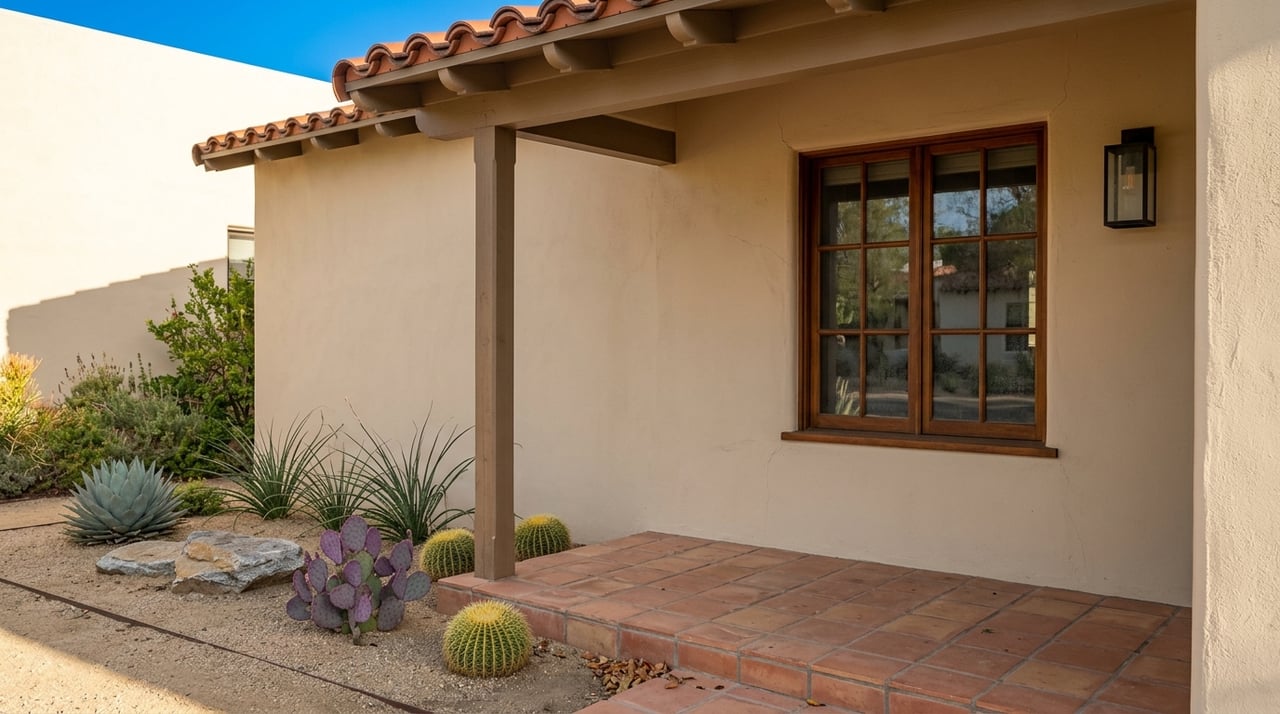
One of the biggest draws in Sam Hughes is the streetscape itself. Historic documentation notes generally uniform setbacks, continuity of scale and proportion, stuccoed masonry, and mission tile roofs, all of which create a recognizable neighborhood rhythm.
You also get built-in neighborhood amenities. Himmel Park, a 25.4-acre city park located in Sam Hughes, adds open space and recreation to daily life, while the neighborhood’s location near the university keeps you close to central Tucson destinations.
For many buyers, that balance is the point. You are not choosing history instead of convenience. In Sam Hughes, you are often choosing both.
Sam Hughes offers more variety than many buyers expect. The historic district nomination identifies 16 architectural styles, with Spanish Eclectic as the dominant style and Ranch as the next most common.
You will also find Craftsman, Mission Revival, Pueblo Revival, Tudor Revival, International, and Art Deco influences, along with related regional forms. That range gives the neighborhood visual interest while still preserving an overall sense of continuity.
The area is also tied to important names in Tucson’s development history, including developer John W. Murphey and architects Josias Joesler and Roy Place. Roy Place also designed Sam Hughes Elementary, which adds another layer to the neighborhood’s architectural story.
This is where many buyers need clarity. A home in a National Register district may carry historic significance, but National Register listing by itself does not change private ownership or automatically impose federal restrictions on a private owner.
In Tucson, local preservation overlays are a separate issue. The city’s Historic Preservation Zone, or HPZ, rules require design review for exterior alterations and new construction, including some work that does not require a building permit, and demolitions in HPZs receive additional review and mayor-and-council approval.
That distinction matters in Sam Hughes because the city’s historic FAQ lists five HPZs and three NPZs, and Sam Hughes is not among them. In other words, you should not assume a district-wide local preservation overlay applies just because a home is in the National Register district.
If you are buying in Sam Hughes, the smartest move is to verify the exact property, not just the neighborhood label. Contributing status, parcel-level overlays, and parking rules can all affect what ownership looks like.
This is especially important if you are planning updates. The research report makes it clear that National Register status, local Tucson overlays, and state tax-incentive eligibility are three separate layers, and they do not always overlap.
For sellers, this matters too. Clear, accurate property details help you market a historic home with confidence and avoid overpromising benefits that may not apply to a specific parcel.
Historic charm is real, but so is maintenance. Guidance cited in the research emphasizes ongoing maintenance and repair rather than extensive replacement, especially for original materials and features.
For example, historic windows can often be repaired or weatherized with storm windows instead of replaced. Limited upgrades to mechanical, electrical, and plumbing systems are considered appropriate, which is helpful if you want a home that functions well without losing its historic character.
A useful shorthand for deferred maintenance in older Tucson homes is to focus on three systems: the roof and gutters, the wall system, and the foundation and drainage system. If you are evaluating a purchase, these areas deserve close attention alongside stucco condition and overall exterior wear.
Sam Hughes is part of the city’s neighborhood parking program, which helps manage overflow parking. That can be a practical plus for daily life in a central neighborhood, but it can also affect renovation planning.
If you expect extended work on a home, temporary construction permits may be needed for contractor vehicles parked on the street. That is a small detail, but in historic neighborhoods, small details often shape how smooth a project feels.
For buyers planning improvements, this is another reason to ask questions early. It is easier to understand parking logistics before work begins than after crews are already scheduled.
For some owner-occupants, Arizona offers a meaningful tax incentive. The state’s Historic Property Tax program can reduce the state property tax assessment by 35 to 45 percent for eligible owner-occupied, non-income-producing properties that are individually listed on the National Register or contribute to a district.
There are conditions, though. The program requires a 15-year agreement, maintenance standards, and State Historic Preservation Office review for work affecting the property’s public appearance.
There is also a separate state program for commercial and other income-producing properties, but it is limited to owners undertaking a significant rehabilitation or improvement project. The key takeaway is simple: tax benefits may be available, but eligibility depends on how the property is used and whether it meets program requirements.
If you like the idea of historic Tucson living but want to compare options, a few nearby districts offer different experiences.
West University sits between downtown and the University of Arizona campus. Its nomination describes tree-lined grid streets and a broad range of styles from Transitional to Art Deco, with bungalow forms dominant in the later development period.
If you are drawn to a central location with another layer of historic character, West University is a natural comparison. It is also one of Tucson’s local HPZ districts, which means the ownership experience can be more regulated than in Sam Hughes.
Rincon Heights offers a denser, more mixed-use comparison. Historic documentation describes it as one of Tucson’s most architecturally diverse neighborhoods, shaped by early public transit, later university housing demand, and a long development period from 1881 to 1962.
That mix can appeal to buyers who want a neighborhood with a broader range of building types and development eras. It can also mean a different feel from the more uniform streetscape found in Sam Hughes.
Catalina Vista is a strong comparison if you are especially interested in ranch-era design. Tucson nomination materials describe it as the first subdivision to fully integrate the ranch house, the automobile, and aesthetic site planning into a unified suburban neighborhood, and 81 percent of contributing houses are ranch style.
For buyers who want historic character with a stronger mid-century suburban identity, Catalina Vista can be worth a closer look. It offers a different expression of Tucson history than the broader architectural mix in Sam Hughes.
If you are house hunting in Sam Hughes, focus on a few practical checkpoints:
Historic neighborhoods reward careful due diligence. When you understand the property clearly, you can enjoy the character without being surprised by the logistics.
If you are selling a home in Sam Hughes, the strongest value story is usually straightforward. Buyers respond to preserved historic character, thoughtful updates, proximity to campus, and neighborhood amenities like Himmel Park.
It is also wise to present the home accurately. Historic listing alone should not be treated as an automatic source of regulatory protection or tax savings, so clear property-specific information helps build trust and keeps your marketing credible.
For the right buyer, Sam Hughes offers something that is increasingly hard to find: a home with real architectural personality in a location that supports everyday convenience. If you are buying, selling, or simply comparing historic neighborhoods across Tucson, working with an advisor who can help you sort through property details, overlays, and market positioning can make the process much easier. When you are ready for tailored guidance, connect with Luxury Signature Group.
Get assistance in determining current property value, crafting a competitive offer, writing and negotiating a contract, and much more. Contact us today.